
Togħmiet
A taste of Malta’s humble table
tba, Malta
23rd October 2026
18:00 - 22:00hrs
Togħmiet is an intimate journey into Malta’s cucina povera, where humble ingredients tell extraordinary stories. There is no menu, you will be served what is sourced fresh on the day.
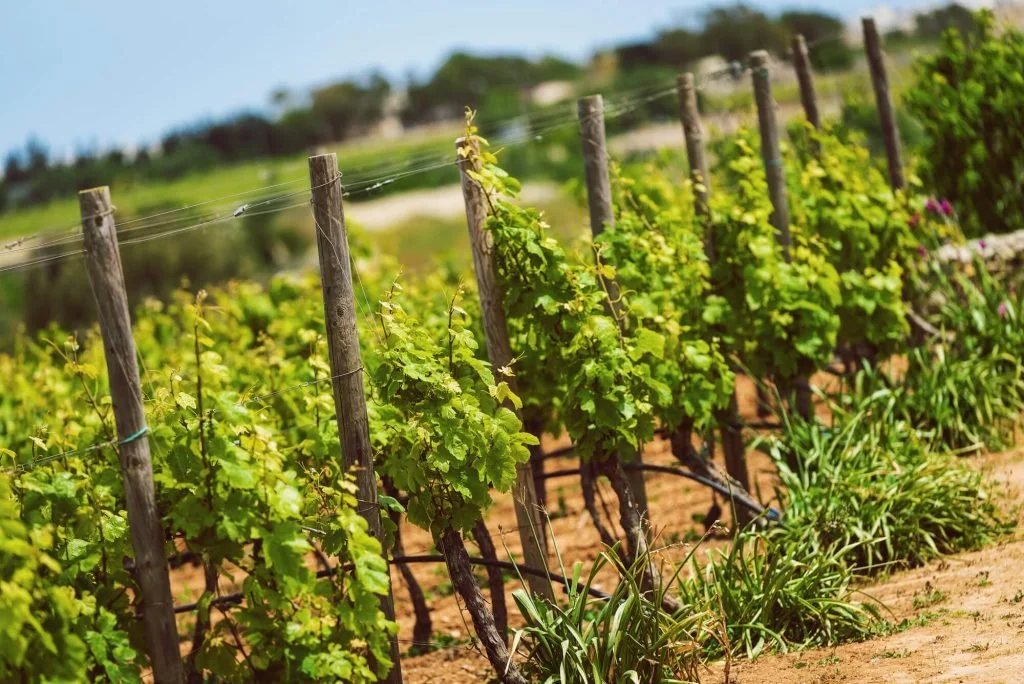
Along the way, discover why wheat, olives and grapes became the Mediterranean’s ancient ‘holy trinity’; how faith and fasting shaped the Maltese table; why wine mattered on islands where fresh water was scarce and not always safe; and how centuries of history can still be tasted in the food we eat today.
Come hungry.
Leave with a taste of Malta you won’t find on a restaurant menu.
-
Togħmiet is an evening devoted to the food, wine and stories of the Maltese Islands.
With Moyra Sammut of Ġenna tal-Art, discover the stories behind the food, while food anthropologist Rachel Radmilli takes you through Malta’s wine history, from grapes, wheat and olives, the ancient ‘holy trinity’ of the Mediterranean, to the development of Maltese wineries.
-
A five-course journey through Malta’s culinary past, with each course personally introduced by Moyra from Genna tal-Art, who will reveal the inspiration behind the dish and what has been placed before you.
Five carefully selected Maltese wines — one glass paired with each course. Food anthropologist Rachel Radmilli will guide you through every pairing, exploring the provenance of each wine, its character and the story behind the vintage.
With every course, heritage interpreter Warren Bugeja will delve into history’s pantry, regaling you with anecdotes, forgotten customs and curious stories that connect what is on your plate to Malta’s past.
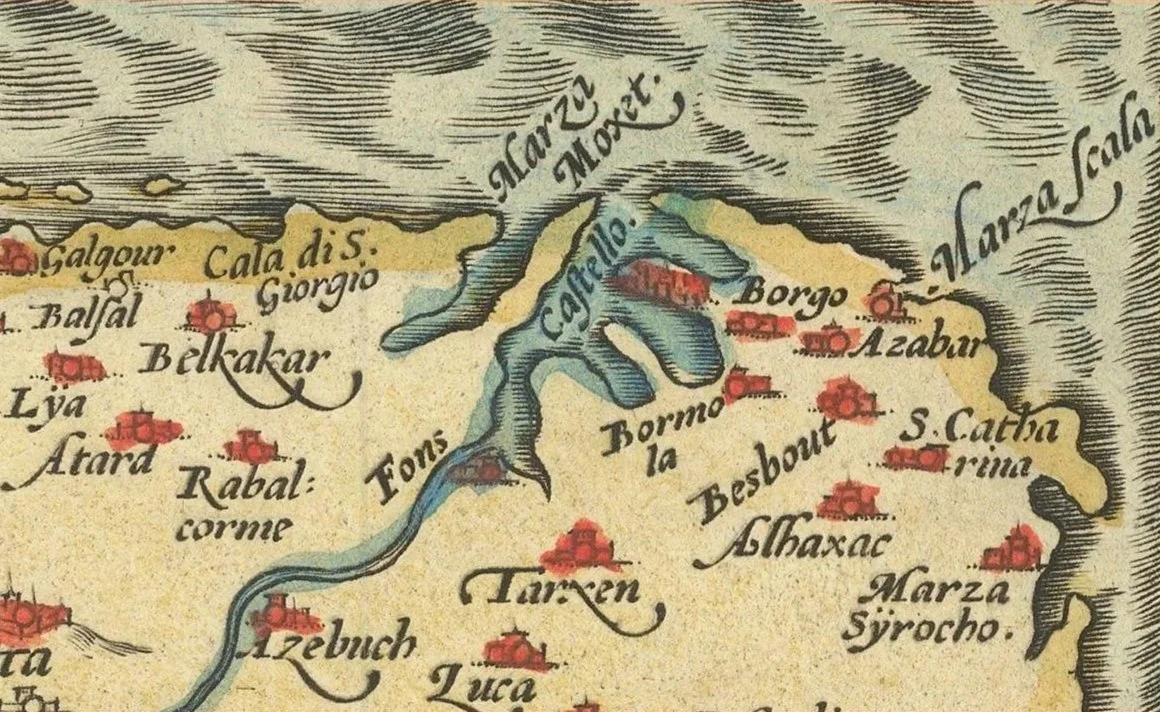
And all of this unfolds within a unique historical backdrop (to be announced soon)
Five courses. Five wines. Stories spanning centuries. One unforgettable table.
-
Food & dietary requirements
This is a tasting experience centred on traditional Maltese ingredients and may include dairy, fish and meat.Please tell us about any allergies or dietary requirements when booking. As the menu draws on traditional recipes and small-scale, seasonal ingredients, it may not be possible to adapt every element of the experience.
A seasonal menu
The precise menu may change according to the season and availability of local ingredients. Foraged herbs, preserves, vegetables, fish and dessert will reflect what is naturally available at the time.Wine
Maltese wines form part of the experience and the storytelling around the meal. If you do not drink alcohol, please let us know when booking.Arrival
We kindly ask guests to arrive on time, as this is a carefully curated five-course experience, with each course accompanied by its own wine pairing and stories.Getting there
More information will be provided once you book.
The Story
Togħmiet
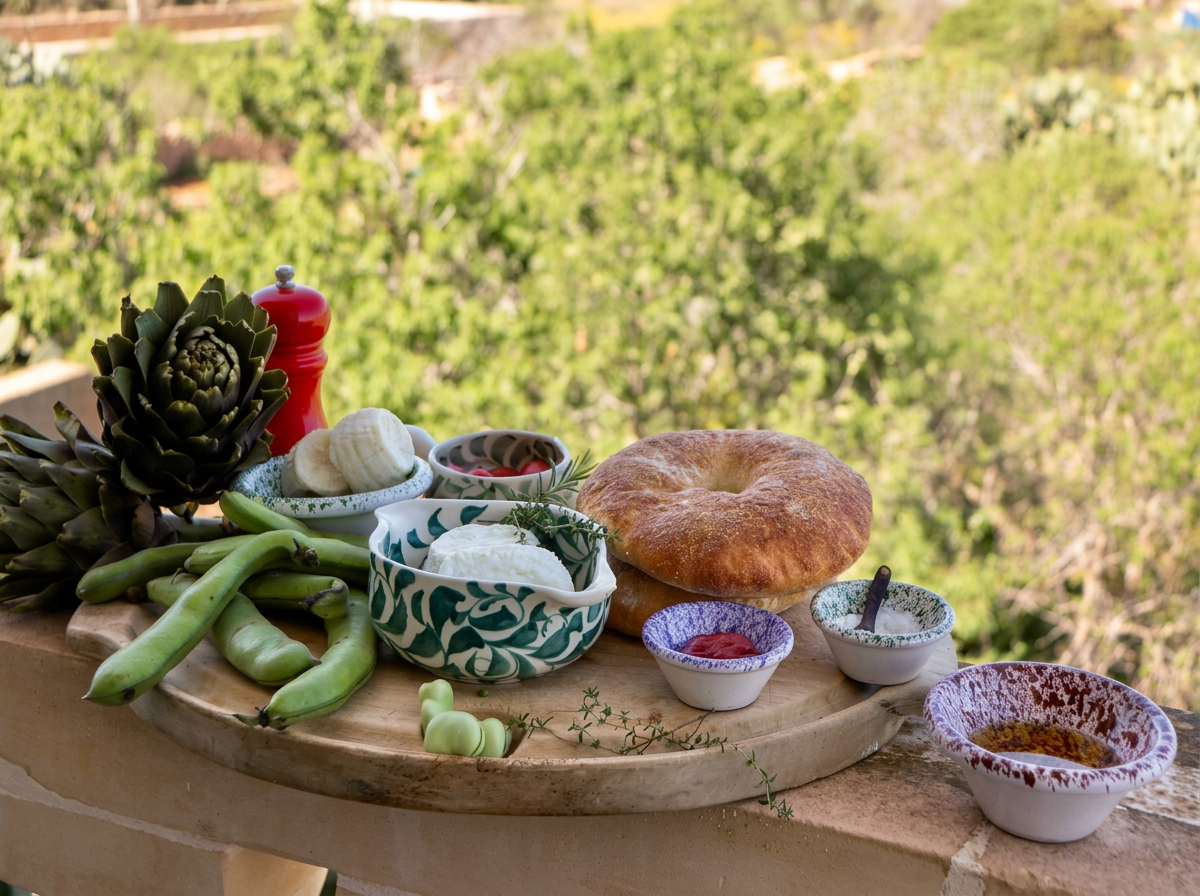
Part tasting, part storytelling and part journey through Malta’s food heritage,
Togħmiet is about more than discovering what Maltese people ate and drank.
It is about discovering why Malta tastes the way it does.
Togħmiet – Maltese for tastes or flavours – explores Malta’s tradition of cucina povera: a way of eating shaped not by abundance, but by seasonality, scarcity, faith, ingenuity and making the very best of what the land and sea could provide.
At the heart of the Mediterranean table were three ancient staples: wheat, olives and grapes. Together, they formed what is sometimes described as the Mediterranean ‘holy trinity’ – bread, olive oil and wine. On islands where fresh water was scarce and not always safe to drink, wine was both a practical staple and part of everyday food culture, rather than something reserved for celebration.
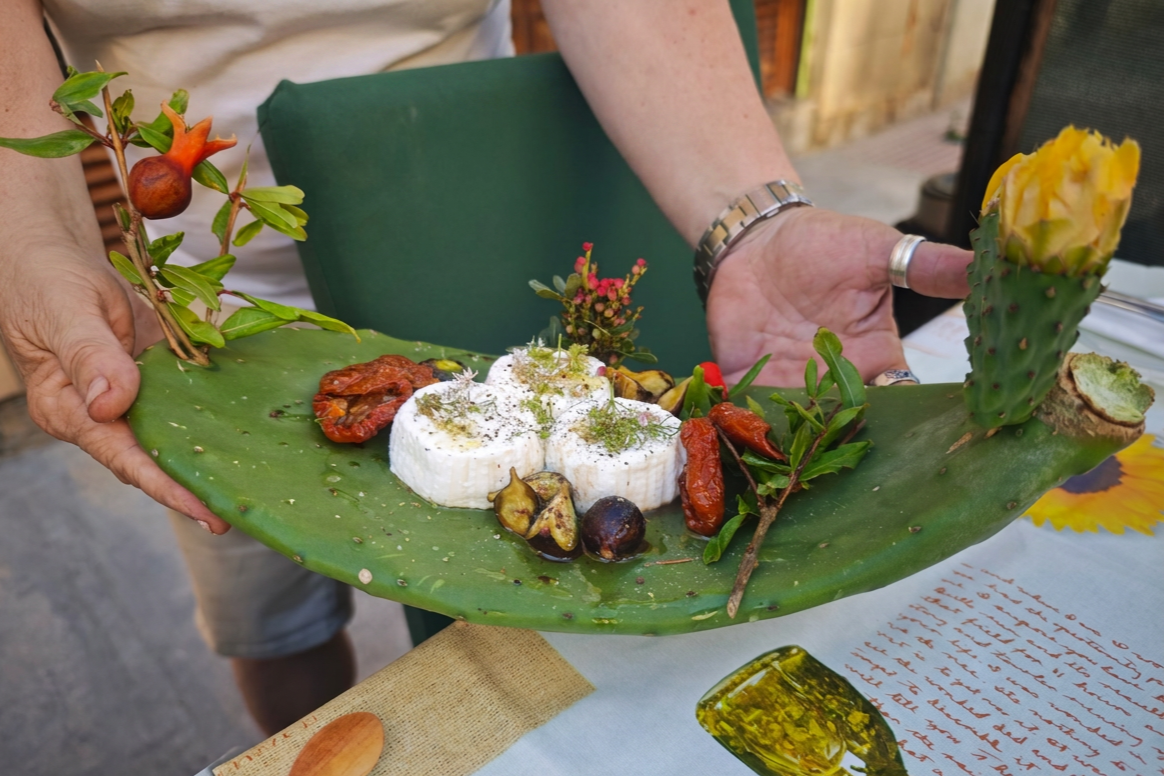
The tasting menu,created by Moyra Sammut of Ġenna tal-Art, draws upon these traditions and the ingredients of the Maltese landscape. Taste ġbejniet, Malta’s traditional small cheeses made from sheep’s milk, served with seasonal accompaniments that might include locally foraged herbs, local pink peppercorns or preserves, such as pickled figs, depending on what nature provides. Other tastes include capunata, Maltese olives and oven-baked onions, grilled seasonal vegetables, locally caught sardines and freshly fried rabbit.
Every dish opens another window onto the islands’ past. We explore the Catholic giorni di magro, or meatless days, and their influence on what people ate; why small fish such as sardines and anchovies were important to ordinary households; and the very real dangers once associated with travelling further from the coast in pursuit of larger, deep-water fish. Our sardines are sourced through Moyra’s relationship with a local fisherman and caught in the waters beneath the dramatic Dingli Cliffs.
Dessert follows the season too but may take us into Malta’s more recent history with a reimagined trifle made with goat’s-milk ricotta – bringing together the legacy of British colonial rule and a time when goats, rather than cows, were a ubiquitous part of the Maltese landscape.
Alongside the food, food anthropologist Rachel Radmilli takes us on a journey through the story of Maltese wine and winemaking: from the grape’s ancient place within the Mediterranean diet to the development of Malta’s wineries and contemporary wine culture.