Culinary Heritage Retreat
Taste the Maltese islands and its traditions.
Discover its stories.
7- Days - Gozo & Malta
Spring 2027
Join us for an intimate seven-day journey through Malta and Gozo, exploring the islands through the food, wine, landscapes and stories that have shaped them.
This is not simply a culinary holiday. It is an invitation to experience the Maltese Islands from the inside; meeting the farmers, bakers, cheesemakers, winemakers, cooks and artisans whose knowledge has been passed from one generation to the next.
-
Across seven carefully curated days, you'll cook traditional dishes, make cheese, taste olive oil among the trees, discover indigenous wines and step behind the scenes of one of Malta's oldest surviving food traditions: its bread.
But food is only part of the story. From the prehistoric temples of Gozo and the fortified Citadel to the honey-coloured streets of Mdina and the Baroque splendour of Valletta, we'll explore how more than 7,000 years of history have shaped what the Maltese eat, grow and produce today.
With a small group and time to slow down, taste and connect, this is Malta and Gozo beyond the usual visitor experience, a journey into the flavours, people and stories of two remarkable Mediterranean islands.
-
A small-group experience, with plenty of time to meet the people behind Malta and Gozo’s food traditions
The expertise of your KulStoria hosts, bringing together the food, history, culture and stories that connect the experiences throughout the week
Seven nights’ accommodation in carefully selected properties in Gozo and Malta. Prices are calculated on twin sharing basis. Prices for Single supplement is available on request.
All breakfasts throughout your stay
Welcome drinks and selected meals and wine as outlined in the itinerary.
All culinary experiences, including hands-on cookery, cheesemaking and traditional food experiences
Wine and olive oil tastings with local producers
Guided visits and experiences with farmers, bakers, cheesemakers, winemakers, food historians and other local experts
Entrance to the archaeological and heritage sites included in the itinerary
All transport during the programme, including ferry crossings and transportation between experiences.
Airport Transfers are not included but can be booked for you. -
Before You Book
Group size
This is an intimate, small-group journey designed to give you time to connect with the people, places and stories you encounter along the way.Arrival & departure
The journey begins with collection from the ferry terminal in Gozo. Your final morning is free for breakfast before departure from Malta.Please plan your flights so that you can arrive in Malta in time for the scheduled group transfer on Day 1. We can provide recommended arrival and departure times before you book your flights.
Getting around
Transport between the experiences is included. The itinerary involves travelling between different parts of Malta and Gozo, including some walking and exploring on foot.Walking & mobility
This is an active cultural and culinary journey rather than a conventional sightseeing holiday. You should be comfortable walking on uneven surfaces, through historic streets and around archaeological and rural sites. Valletta, Mdina and Birgu include steep streets, steps and uneven paving.Please let us know before booking if you have any mobility requirements so we can discuss whether the itinerary is suitable for you.
Food & drink
Food is at the heart of the experience. You'll enjoy traditional Maltese and Gozitan dishes, local produce, wine, olive oil, cheese, bread and other regional specialities.Please tell us about any dietary requirements or food allergies before booking. We will do our best to accommodate dietary needs, but because many experiences take place with small artisan producers and traditional food makers, we cannot guarantee that every element of the programme can be adapted.
Wine & alcohol
Wine is an important part of the culinary culture explored throughout the journey, and several tastings are included. If you do not drink alcohol, please let us know in advance and we will advise what alternatives can be provided.The pace of the journey
The programme is carefully paced to combine exploration with time to slow down and enjoy the islands. Some days involve several experiences, while others allow time to relax or explore independently.This is a journey for people who are curious about food, culture, history and the people who keep traditions alive. It is less about ticking off sights and more about experiencing Malta and Gozo from the inside.
What to bring
Comfortable footwear is essential. We also recommend bringing sun protection, a hat, a reusable water bottle and clothing suitable for both walking and dining experiences.Weather & seasonal experiences
Some experiences, particularly those involving farming, foraging and the countryside, are dependent on the season and weather. The precise activity may occasionally change to reflect local conditions and what is naturally available at the time of your visit.A note about the itinerary
KulStoria works with independent producers, artisans, historians and specialist guides. This means the experience is intentionally personal and cannot always be delivered in exactly the same way as a conventional packaged tour. Occasionally, an experience may need to be adjusted because of availability, weather or circumstances beyond our control. Where this happens, we will provide an alternative experience of comparable character and value.Questions before booking?
If you are unsure whether the journey is right for you, or have questions about the accommodation, food, walking, accessibility or itinerary, please get in touch before booking. We'd be happy to talk it through with you. -
We will be running retreats from the following dates:
4th - 11th March
15th - 21st April
22nd - 28th April
Please specify your dates when booking. -
Booking & payment
A €500 per person deposit secures your place.
The balance must be paid in full 60 days before the retreat.Book and pay in full 90 days or more before departure to receive our €200 per person Early Bird discount.
For bookings made within 60 days of departure, full payment is required at the time of booking.
When to book your travel
Our retreats are deliberately kept small and require a minimum number of guests to go ahead.
We will confirm your retreat no later than 90 days before departure.
We strongly recommend waiting for our written confirmation before booking flights or other non-refundable travel arrangements.If we have to cancel the retreat, you will receive a full refund, or, if alternative dates are offered, you can choose to transfer your payments to the new dates.
If your plans change
You can transfer your place to another person at any time, or transfer your booking to another retreat up to 30 days before departure. Cancellations must be made by email.For cancellations, the following refund terms apply:
90+ days before departure: full refund
60–89 days: refund less a €250 administration fee
30–59 days: deposit is non-refundable
Less than 30 days: payments are non-refundable.
Please read our full Booking Terms & Conditions before booking.
Spring 2027 - Early bird discount
Finalise your booking by 30/12/2026
Itinerary
-
From Luqa airport you will make your way to the northernmost tip of Malta and take a 25-minute ferry ride to Gozo, an island shrouded in myth and legend.
The Phoenicians and Romans called it Gaulos, and much later the Castillians ‘the Island of Joy’, but for Homer it was Ogygia, where the nymph Calypso detained Odysseus for seven years mesmerised by her charms.
Settle into your accommodation, with time to unwind and acclimatise to the slower rhythm of island life.
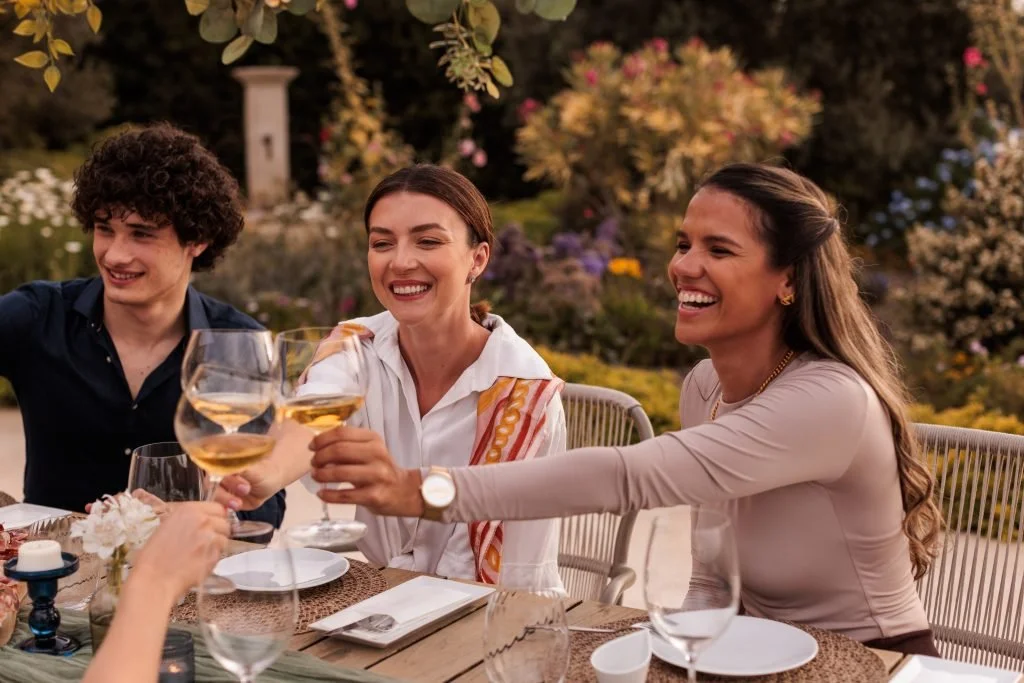
As evening approaches, join your hosts and fellow guests for welcome drinks and the beginning of your culinary journey.
Over a relaxed aperitif, we'll introduce the extraordinary story of food in the Maltese Islands, an archipelago at the crossroads of the Mediterranean, where Phoenicians, Romans, Arabs, the Knights of St John and the British have all left traces on the way people grow, cook and eat.
You'll also discover some of the ingredients and traditions we'll encounter over the coming week, from ancient grains, olive oil and honey to sheep's cheese, bread and indigenous grape varieties.
Then settle around the table for our first meal together and the warmth of Gozitan hospitality, the perfect introduction to the week ahead.
-
After breakfast, roll up your sleeves for your first hands-on experience: an intimate Gozitan cookery class at Maldonado.
Working with seasonal ingredients, you'll discover the flavours and techniques behind traditional island cooking and the stories woven into dishes and street food that have been prepared in Maltese and Gozitan homes for generations.
Then comes the best part: sitting down together to enjoy what you've created.
Later, we turn from culinary heritage to the much older story of Gozo itself.
We'll explore the imposing Citadel rising above Victoria and the remarkable Ġgantija Neolithic Complex, home to some of the oldest surviving free-standing monumental structures in the world.
Together they reveal two very different chapters of Gozo's extraordinary past, from its prehistoric communities to the fortified island society that developed over the centuries.
From Field to Table
This evening, we return to the present with dinner at Peppina in Xewkija, where two brothers are reimagining their Gozitan culinary roots through a contemporary, vegetable-focused approach to food.
Their philosophy begins with the land. Seasonality, provenance and local produce guide a constantly evolving menu, drawing inspiration from their own fields and from the farmers and artisan producers around them. Vegetables take centre stage, complemented by carefully chosen local ingredients and transformed into inventive small plates designed for sharing.
Over a relaxed dinner, we'll discover another side of Gozitan food culture—one that respects the flavours and ingredients of the past without being constrained by them.
It is a fitting end to our day: from the recipes handed down through generations and the extraordinary monuments of Gozo's earliest inhabitants to a new generation of cooks finding fresh ways to express the island they call home.
-
This morning we delve into one of Gozo's most distinctive culinary traditions: the ftira Għawdxija, the Gozitan ftira.
Neither quite a pizza nor a pie, this rustic speciality is uniquely associated with Gozo. Its bread-dough base is folded around its filling but left tantalisingly open at the centre, before being baked in the fierce heat of a traditional wood-fired stone oven. Perhaps its most characteristic version combines thinly sliced potato with fresh Gozitan ġbejna, traditionally made from sheep's milk, a wonderfully simple combination that speaks of Gozo's agricultural past.
To understand the ftira, however, you need to understand the village bakery.
For generations, these smoky, wood-fired ovens were part of the rhythm of Gozitan village life. Families prepared their Sunday dishes at home and carried them to the local baker, leaving trays of meat and potatoes to slowly roast in the residual heat of the communal oven while they attended Sunday Mass. Afterwards, they would collect their cooked lunch on the way home, a wonderful example of how food, faith and community once fitted naturally into the rhythm of the same day.
We'll explore this living baking culture and discover how the island's old village ovens continue to produce the breads, savoury pies and ftajjar that remain such an important part of Gozitan food culture.
Gozo even has its own great baking rivalries. In Nadur, the neighbouring family-run bakeries Maxokk and Mekren have become island institutions, each fiercely loved for its own version of the Gozitan ftira. Mekren's story stretches back to 1899 and five generations of the same family, while Maxokk has been baking in Nadur since the early 1930s. Their continuing popularity shows how something born from the everyday food of a village can become one of the defining tastes of an entire island.
Later, we'll head into Gozo's countryside for a closer encounter with its edible landscape. Depending on the season, this may take the form of a guided foraging experience discovering the medicinal and nutritional benefits of Gozo’s landscape. or another hands-on activity exploring the wild plants, seasonal produce and traditional knowledge that have sustained island communities for generations.
As afternoon gives way to evening, we turn from bread and wild foods to another ancient Mediterranean tradition: wine.
At Massar Winery, we'll discover the changing face of Gozitan winemaking and taste wines shaped by the island's limestone soils, Mediterranean sunshine and distinctive microclimate.
From flour and fire to wild herbs and vines, today is about tasting Gozo through the landscape that created it.
-
Few ingredients tell the story of the Mediterranean as eloquently as the olive.
Today we spend time among the trees, discovering Malta and Gozo's centuries-old relationship with olive cultivation and tasting locally produced extra virgin olive oils.
Learn how varieties, climate, harvesting and pressing influence flavour and quality, and discover the characteristics that distinguish a carefully produced extra virgin olive oil.
Then, surrounded by the grove, we'll gather for a special culinary experience.
Here food returns to its most elemental setting: the landscape from which it comes. Seasonal produce and traditional flavours come together in a relaxed celebration of the Gozitan countryside and the people who continue to cultivate it.
Later, we'll cross to Malta and continue to our next accommodation.
The evening is left deliberately unhurried. Settle in, relax, use the fully equipped spa or take the opportunity to wander through Mdina as dusk falls.
When the daytime crowds disappear and lamps illuminate its narrow honey-coloured streets, Malta's ancient walled capital truly earns its name: the Silent City.
-
After breakfast, we travel into the countryside to discover another cornerstone of the Maltese table: cheese.
Working alongside an artisan producer, you'll learn how fresh local milk is transformed into cheese through techniques rooted in generations of rural knowledge.
This hands-on experience takes us beyond simply tasting the finished product. You'll discover the importance of the animals, the milk, fermentation, seasonality and the small decisions a cheesemaker makes at every stage of production.
Naturally, there will also be time to taste.
Later, the mood changes as we explore a very different side of Malta's past.
As darkness falls, we'll enter the winding lanes of medieval Birgu for a rather different encounter with Malta's past.
Led by Mario Cacciottolo, an award-winning guide and former BBC journalist, we'll leave the grand narratives of knights and sieges behind to uncover the wonderfully strange—and sometimes decidedly unsavoury—stories of the people who once inhabited these ancient streets.
Birgu was home to Malta's Inquisitor's Palace, where accusations of sorcery, superstition and witchcraft came before the tribunal. Drawing upon stories preserved in the historical record, we'll hear of curses, incantations and extraordinary love spells intended to secure an unwilling sweetheart or exact revenge upon an unfaithful lover, sometimes involving ingredients you certainly wouldn't expect to find in a recipe book.
As we weave through Birgu's atmospheric lanes, palazzos and fortifications, Mario will introduce us to tales of witchcraft and torture, ghosts and gruesome murders, including an executioner's house, a murderous priest and even a church said to have received a visit from the Devil himself.
It's history from the shadows: strange, entertaining and occasionally macabre, revealing the beliefs, fears, desires and superstitions of ordinary people whose stories rarely find their way into conventional histories of Malta.
-
This morning we head to Valletta, Malta's magnificent UNESCO World Heritage capital.
Founded by the Knights of St John following the Great Siege of 1565, Valletta is a city built to impress. Behind its places and auberges and steeped streets, lie centuries of stories encompassing religion, warfare, trade, art and the cosmopolitan life of a Mediterranean port.
We'll explore the city before stepping inside St John's Co-Cathedral. Its austere limestone exterior gives little indication of the extraordinary Baroque interior within, where richly carved stone, gilding and intricate marble tombs surround one of Malta's greatest artistic treasures: Caravaggio's monumental Beheading of Saint John the Baptist.
There will also be time to explore Valletta at your own pace, browse its independent shops or simply sit at a café and watch the city go by.
Later, we return to something much humbler, but no less important to Malta's story: bread.
With Professor Noel Buttigieg, Malta's leading food historian, we'll discover how bread was once quite literally a matter of survival. For centuries, Malta could not produce enough grain to feed its population, making the supply and price of wheat a constant concern for those who ruled the islands. Successive governments understood that keeping bread affordable was essential not only to preventing hunger, but also to maintaining social stability. Under British rule, attempts to liberalise the grain trade and reduce government intervention would expose just how politically charged the price of a loaf could be.
We'll explore Casal Qormi, today's Ħal Qormi, a town whose identity has been intertwined with bread for centuries. Renowned for its bakers and wood-fired ovens, Qormi supplied bread to nearby Valletta and developed a reputation that survives today, many Maltese will still tell you that the island's finest bread comes from Qormi.
But to understand Maltese bread, you need to see a bakery when it truly comes alive.
After dark, we'll step behind the scenes of a traditional Qormi bakery as the night's work begins. While much of Malta sleeps, the bakers prepare their dough, tend the ovens and begin producing the crusty loaves that will appear on tables the following morning.
Amidst the heat, flour and aroma of freshly baked bread, Professor Buttigieg will unravel the story of one of Malta's simplest foods and reveal how the humble loaf connects agriculture, politics, hunger, community and centuries of Maltese history.
It is a fitting contrast: from the grandeur of the Knights of St John to the everyday loaf that fed the people living beyond their palace walls.
-
Our final full day begins by travelling deep into Malta's prehistoric past.
We'll descend into the Ħal Saflieni Hypogeum, an extraordinary subterranean complex carved into the living rock more than 5,000 years ago. One of Malta's most remarkable UNESCO World Heritage Sites, its chambers offer an intimate glimpse into the ritual world of the islands' prehistoric inhabitants.
From beneath the earth, we return to the landscape, and to one of the world’s oldest and most evocative natural sweetners: honey.
At the apiary of Professor David Mifsud, Head of the Department of Rural Sciences and Food Systems at the University of Malta, we'll discover the islands' long beekeeping tradition and the relationship between bees, native Mediterranean flora, agriculture and the distinctive character of Maltese honey.
Our final experience brings together many of the themes of the week at Ta' Betta Wine Estates.
Set among vineyards overlooking the Maltese countryside, the estate represents a contemporary expression of an ancient Mediterranean relationship between people, soil and vine.
During a guided tasting, we'll explore the estate's wines and discover how Malta's limestone geology, climate and winemaking traditions find expression in the glass.
As we raise a final glass together, we'll reflect on a week spent experiencing Malta and Gozo through their landscapes and flavours, and, above all, through the people who keep their traditions alive.
-
Enjoy one final breakfast before saying goodbye to Malta.
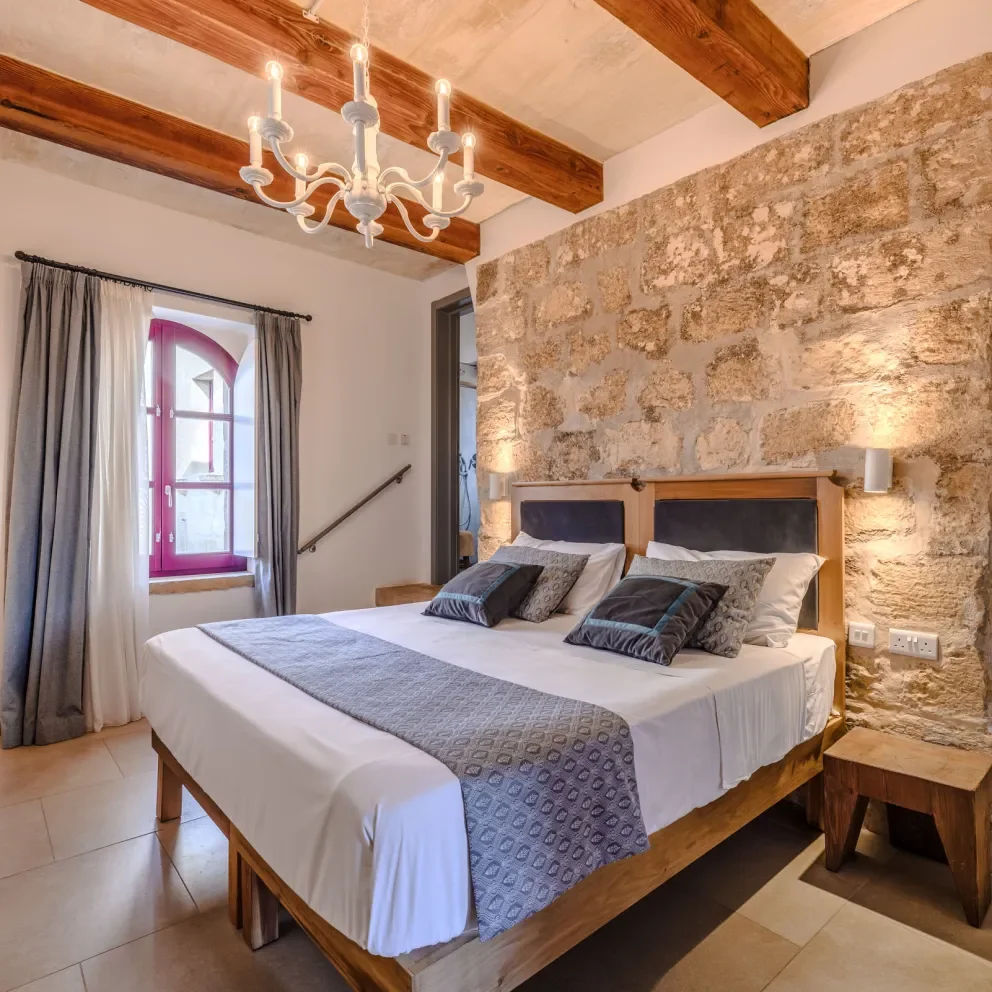
Your accommodation - Malta
Mulberries
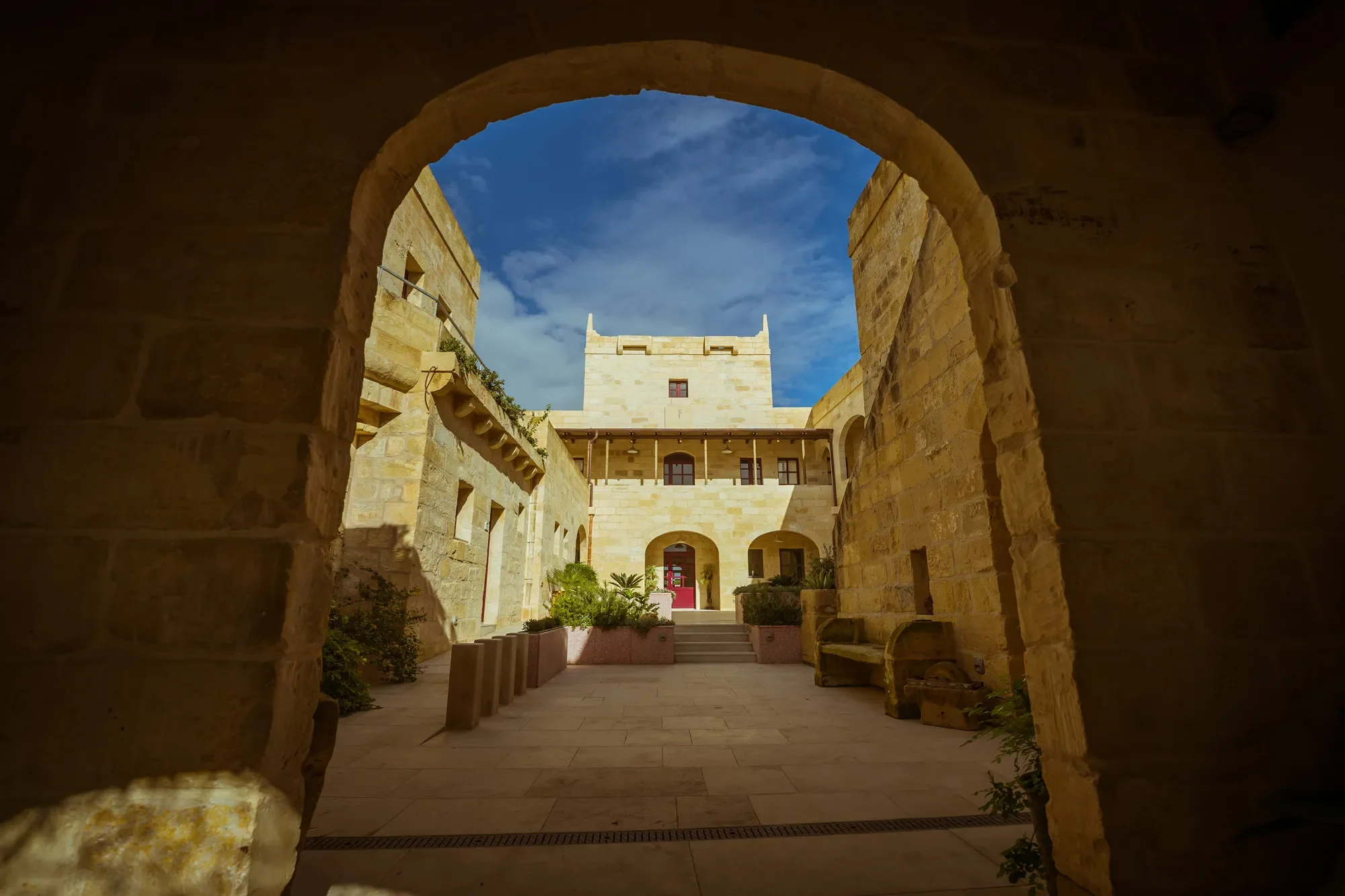
Your home for the retreat is a charming, family-run boutique hotel nestled in the tranquil Maltese countryside, where traditional hospitality meets understated luxury.
Designed using centuries-old Maltese building techniques, the hotel celebrates the island's rural heritage while embracing modern sustainability.
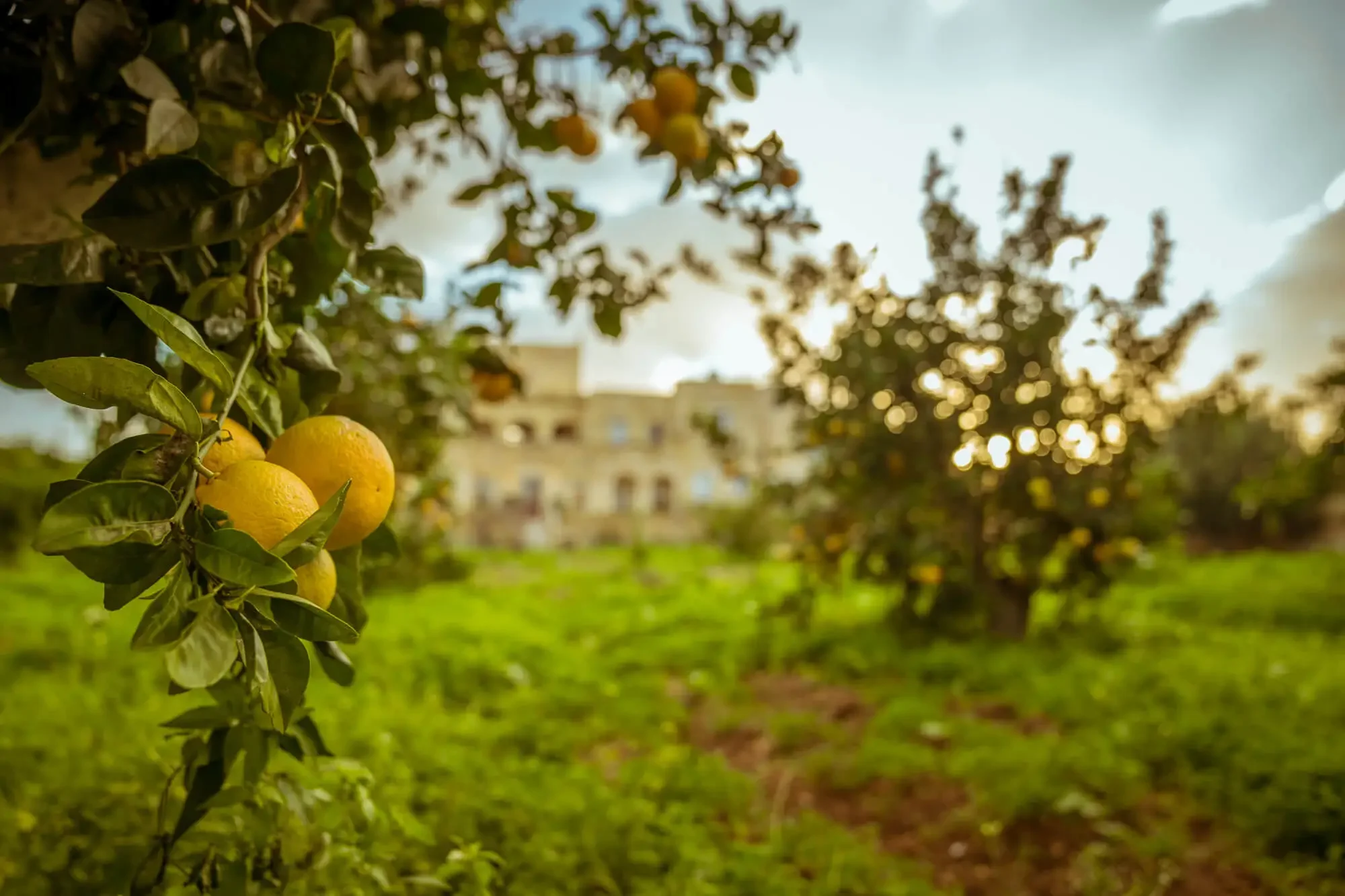
Surrounded by peaceful gardens and open countryside, it offers an authentic sense of place, complete with beautifully appointed rooms, a spa, swimming pool and welcoming spaces to relax after each day's adventures.
Meet Your Hosts
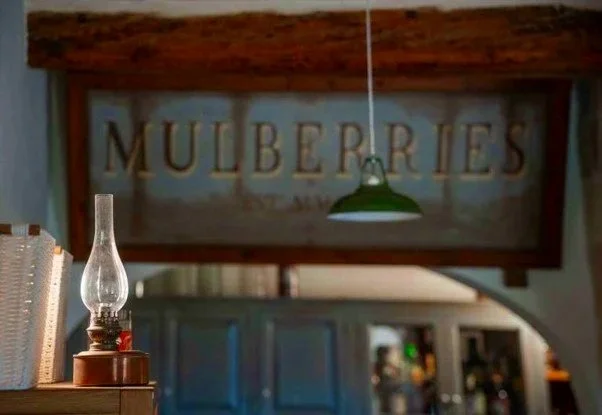
Aaron and Jesabel Abela are the visionary founders of Mulberries Wellbeing Château, a remarkable family-run retreat that blends authentic Maltese heritage, architecture and warm hospitality. Their shared journey began in 2006 when Aaron, an architect with a lifelong passion for vernacular architecture, discovered a neglected rural farmhouse in Żabbar and imagined its transformation into a place of beauty, wellbeing and connection.
What followed was a fifteen-year labour of love. Aaron personally led the architectural vision, drawing on traditional Maltese building techniques, sustainable design principles and local craftsmanship to create a property that sits harmoniously within its landscape. When the right contractor could not be found, he became directly involved in the restoration, ensuring every detail reflected the original vision.
Jesabel's expertise in estate management was instrumental in bringing the project to life, overseeing the operational and finishing stages while helping shape the welcoming atmosphere for which Mulberries is now known. Together, they have created far more than a boutique retreat—they have crafted an immersive experience where guests discover Malta through its culture, history, food and heartfelt hospitality, sharing the island they love with visitors from around the world.